Protect From Freezing Freight Cargo: A 2026 Guide
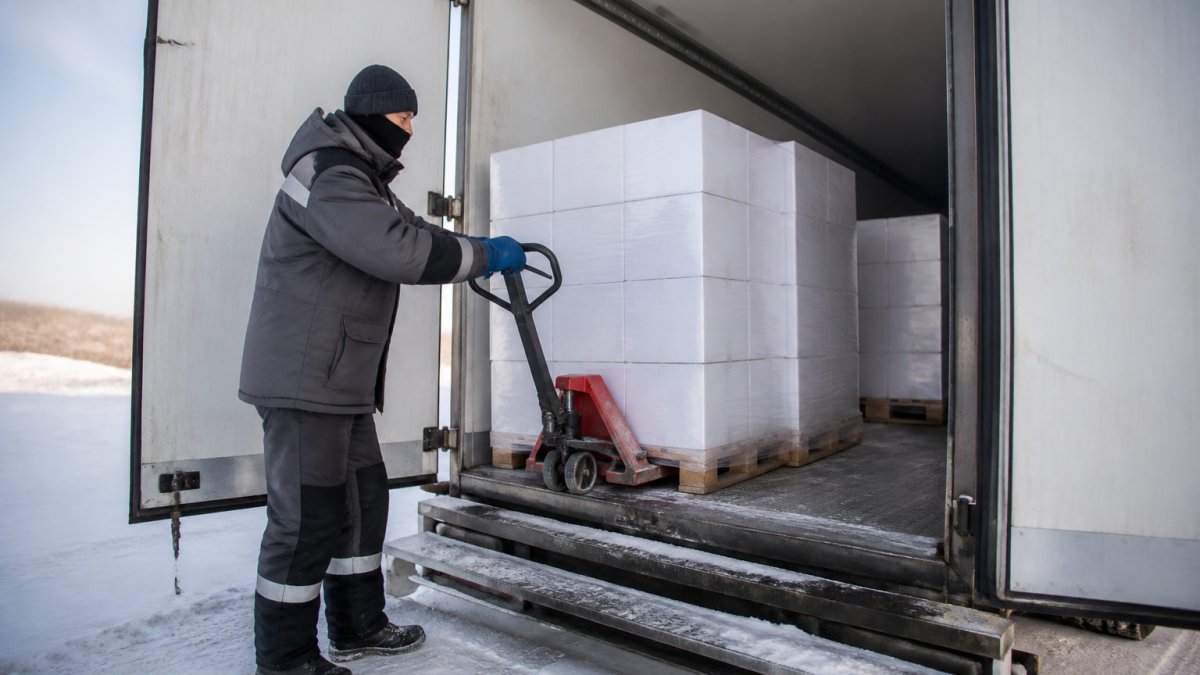
Table of Contents
- Understanding Temperature Excursions and Freezing Risk
- Passive vs Active Thermal Protection Methods
- Heated Trailer Freight Requirements for Winter Shipping
- Winter Freight Shipping Risks and Mitigation Strategies
- Cold Chain Best Practices to Prevent Cargo Damage
- Monitoring, Documentation, and Claims Prevention
- Cost-Benefit Analysis: Which Protection Level You Need
- Conclusion
- Frequently Asked Questions
Last Updated: September 28, 2026
Understanding Temperature Excursions and Freezing Risk
A temperature excursion occurs when cargo is exposed to temperatures outside its required range during transit, storage, or handling. For temperature-controlled freight cargo, even brief exposure to freezing conditions can compromise product integrity, render medications ineffective, or destroy perishable goods entirely, which is why shippers must protect from freezing freight cargo.
Freezing damage isn't always visible. Vaccines lose potency. Biologics denature. Frozen food develops ice crystals that rupture cell walls. These failures may not appear until the product reaches its end user, at which point the liability falls on the shipper.
A single temperature excursion can compromise an entire load of vaccines worth hundreds of thousands of dollars. Understanding the methods available to protect from freezing freight cargo is essential for preventing costly claims and maintaining compliance.
Passive vs Active Thermal Protection Methods
Protecting temperature-controlled freight cargo requires choosing between passive and active thermal protection, or combining both. The choice depends on transit duration, ambient temperature, cargo sensitivity, and risk tolerance.
Passive Protection: Insulation and Thermal Blankets
Passive protection relies on insulation, thermal mass, and reflective barriers to slow heat transfer without active heating or cooling.
Common passive approaches include foam insulation, thermal blankets, and phase-change materials. Insulated shippers are effective for shorter transit windows, typically under 24 hours.
Passive protection's advantage is cost: no equipment to power, no complex logistics, no dependency on electricity or mechanical systems.
The limitation is clear: passive protection has a finite window. In freezing conditions, an insulated box will eventually reach ambient temperature. Passive methods work best as a supplementary layer, not as a standalone solution for long-distance winter freight.
Active Protection: Heated Trailers and Climate Control
Active thermal protection uses powered heating or climate control systems to maintain cargo temperature regardless of external conditions. Heated trailers can maintain interior temperatures well above freezing even when outside temperatures drop far below zero.
Active systems offer reliability that passive methods cannot match. A properly maintained heated trailer can hold a set temperature within 1-2 degrees for the entire transit, regardless of weather.
The trade-off is complexity and cost. Heated trailers require regular maintenance, calibration, and fuel or electricity. System failures create risk; a broken heater in winter can result in rapid temperature loss. Professional logistics providers pair active heating with redundant data logging, real-time monitoring, and pre-warmed trailers.
For pharmaceutical shipments and high-value biologics, active protection is the standard.
Heated Trailer Freight Requirements for Winter Shipping
Heated trailer freight requirements vary by cargo type and regulatory framework, but certain standards apply universally when protecting temperature-controlled freight cargo during winter months.
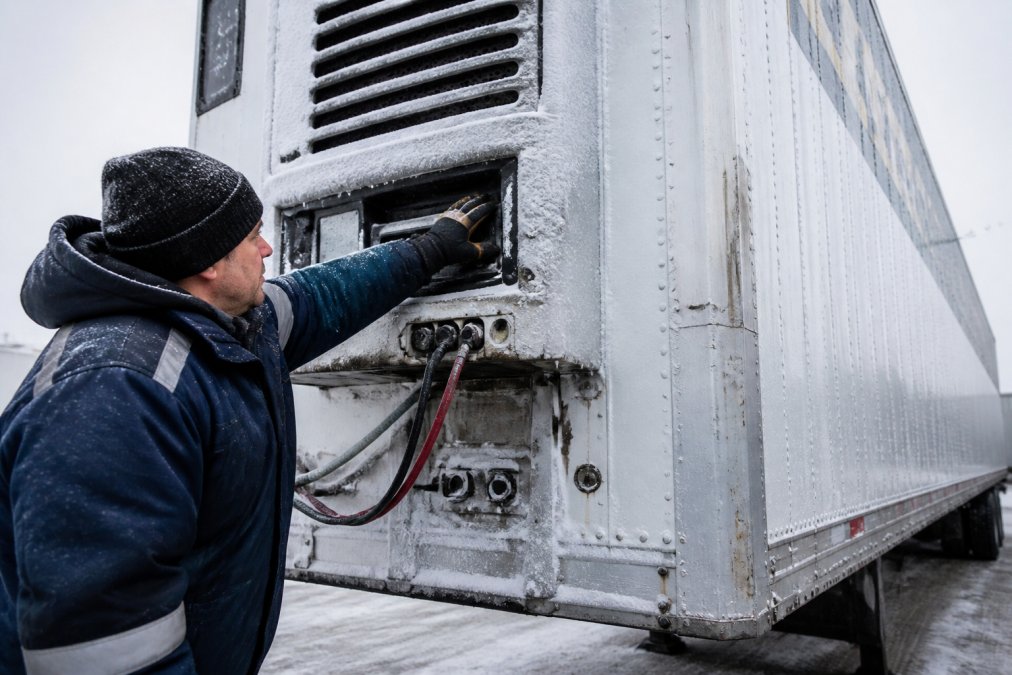
The trailer must have a functioning heating system capable of maintaining target temperature under worst-case ambient conditions. For most winter routes, this means maintaining 35-46°F for pharmaceutical products even when outside temperatures reach 0°F or lower. The heating system should have redundancy to prevent temperature loss from single component failure.
Pre-warming the trailer before loading is essential. Loading cargo into a trailer at ambient temperature forces the heating system to work harder and longer to reach setpoint.
Data logging is non-negotiable. Every shipment should include calibrated temperature data loggers that record interior temperature at regular intervals (typically every 15-30 minutes). These logs create documentary evidence that the cold chain was maintained. The data logger should be placed in the warmest part of the load, usually near the trailer door.
Tamper-evident seals on trailer doors prevent unauthorized access and create a clear chain of custody.
Load configuration matters. Cargo should be arranged to ensure even temperature distribution without blocking airflow around the heating system.
Winter Freight Shipping Risks and Mitigation Strategies
Winter freight shipping creates multiple failure points that shippers must actively manage. Understanding these risks is the foundation for building effective mitigation strategies.
Extreme weather exposure is the most obvious risk. Freezing temperatures, snow, ice, and wind reduce the effectiveness of passive protection and stress active systems. The larger the temperature differential between interior and exterior, the greater the risk of component failure.
Condensation and freeze-thaw cycles are often overlooked. When warm cargo is loaded onto a cold trailer, moisture condenses on product surfaces. If the heating system fails or cargo is exposed to ambient conditions during unloading, that moisture freezes, damaging the product. Pre-conditioning trailers prevents this initial temperature shock.
Driver behavior and route decisions introduce human variables. Unfamiliar drivers might park in direct wind or take detours that extend transit time. Professional carriers train drivers on winter protocols and use GPS monitoring to verify route adherence.
Equipment failure becomes more likely in winter. Diesel fuel can gel in extreme cold. Battery voltage drops in freezing temperatures. Preventive maintenance is critical; carriers should inspect trailers and test heating systems before winter season begins.
Documentation gaps expose shippers to liability even when the product was actually protected. Without data logger records, a shipper cannot defend a claim.
Mitigation strategies include: selecting carriers with winter-ready equipment and maintenance records; using calibrated data loggers with battery backup; specifying pre-conditioning requirements; choosing direct routes during winter; communicating weather forecasts to carriers; requiring real-time GPS monitoring; and including tamper-evident seals with documented handoffs.
Cold Chain Best Practices to Prevent Cargo Damage
Best practices in cold chain management are built on a foundation of visibility, documentation, and redundancy. These practices apply whether you're shipping across state lines or across the country.
Visibility starts before the truck leaves the dock. Shippers should verify the trailer's interior temperature, confirm heating systems are functioning, and document the baseline condition.
Packaging design matters as much as transportation. Cargo should be packaged with its own thermal protection, insulated boxes, thermal blankets, or phase-change packs, so that even if the trailer's system fails, the product has a secondary layer of protection.
Load staging and documentation prevent mistakes. Cargo should be staged in a climate-controlled area immediately before loading. Each box should be labeled with contents, required temperature range, and handling instructions.
Handoff procedures are where many cold chains break. Professional logistics providers establish formal handoff protocols: the receiving carrier inspects seals, verifies interior temperature, and documents condition before accepting the shipment.
Real-time monitoring provides early warning of problems. GPS tracking shows whether the truck is on route and on schedule. Temperature monitoring alerts the shipper if interior temperature drifts outside acceptable limits while the truck is still in transit, allowing for intervention before damage occurs. This is fundamentally different from historical data logging, which only proves what happened after the fact.
Contingency planning acknowledges that problems happen despite best efforts. Shippers should establish protocols for what happens if a carrier misses a delivery window, if a heating system fails, or if weather forces a route change. Having these conversations before an emergency occurs prevents panic decisions that compound the problem.
Monitoring, Documentation, and Claims Prevention
The difference between a cold chain that protects cargo and one that merely documents failure is monitoring and documentation.
Real-time temperature monitoring allows shippers to see interior trailer temperature continuously during transit. If the system detects a temperature excursion, the interior dropping below the minimum acceptable temperature, the shipper and carrier are alerted immediately. At that point, decisions can be made: reroute to a warmer location, reduce load density to improve airflow, or stop and troubleshoot the heating system. This is active management, not passive observation.
Data loggers create the legal record. Every shipment should include at least one calibrated temperature data logger that records interior temperature at regular intervals. For high-value shipments, redundant loggers in different locations within the load provide additional assurance.
Claims prevention depends on documentation. If a product arrives damaged and a claim is filed, the shipper's defense rests on demonstrating that the cold chain was maintained. This requires:
- Data logger records showing temperature remained within acceptable limits
- Carrier maintenance records proving heating systems were functional
- GPS records showing the truck remained on route and did not sit idle in extreme conditions
- Chain of custody documentation showing no unauthorized access or handling
Cost-Benefit Analysis: Which Protection Level You Need
The choice between passive protection, active protection, or a hybrid approach should be driven by cargo value, transit duration, regulatory requirements, and acceptable risk tolerance.
Conclusion
Protecting temperature-controlled freight cargo from freezing requires understanding the mechanisms of thermal loss, selecting appropriate protection methods, and implementing monitoring and documentation systems that provide both assurance and proof. Winter shipping introduces specific challenges, extreme cold, equipment stress, condensation risk, that demand active management rather than passive hope.
Frequently Asked Questions
What is freeze protection in freight shipping?
Freeze protection in freight shipping refers to the methods and equipment used to prevent cargo from reaching freezing temperatures during transit. This includes passive solutions like thermal blankets and insulated packaging, as well as active systems such as heated trailers and climate-controlled units. The goal is to maintain cargo within safe temperature ranges, especially critical for pharmaceuticals, biologics, and perishable goods that can be permanently damaged by freezing or extreme cold exposure.
What types of freight are most susceptible to freezing damage?
Pharmaceuticals, vaccines, biologics, and clinical trial materials are highly vulnerable to freezing because ice crystal formation can destroy molecular structure and render products ineffective. Frozen foods, fresh produce, and dairy products also suffer quality degradation and spoilage when exposed to freeze cycles. High-value specialty chemicals, certain cosmetics, and medical devices with liquid components face similar risks. Any cargo with water content or temperature-sensitive formulations requires active freeze protection during winter transit.
How do data loggers and real-time GPS monitoring prevent temperature excursions?
Data loggers and GPS monitoring don't prevent excursions, they detect and document them. Calibrated data loggers record temperature at set intervals throughout transit, creating an audit trail of conditions. Real-time GPS allows dispatch to monitor location and communicate proactively if delays occur. Together, these tools enable carriers to respond immediately to problems, provide proof of compliance for regulatory audits, and support claims documentation if damage occurs. Prevention relies on proper equipment selection and driver training, not monitoring alone.
What should I look for in a logistics provider to ensure cold chain integrity?
Verify that the provider uses pre-cooled trailers, maintains calibrated data loggers on every shipment, and employs vetted, cold-chain-trained drivers with documented certifications. Request their on-time delivery rate and claims history, high on-time performance and low temperature-related damage claims indicate operational discipline. Confirm they offer 24/7 dispatch support, a named point of contact, and tamper-evident seals. Ask for SOP documentation aligned with GDP (Good Distribution Practice) expectations and proof of compliance audits. Request a quote that includes monitoring and documentation services.