Book Nationwide Temperature Controlled Shipping: 2026 Guide
Table of Contents
- What You'll Need Before Booking Nationwide Temperature-Controlled Shipping
- Step 1: Define Your Temperature-Controlled Shipping Requirements
- Step 2: Gather Pharmaceutical Shipping Documentation
- Step 3: Choose a Carrier with Proven Cold Chain Monitoring and Tracking
- Step 4: Plan for Refrigerated Freight Transit Time
- Step 5: Confirm the Booking and Prepare for Pickup
- Common Mistakes to Avoid When Booking Temperature-Controlled Shipping
- Conclusion
- Frequently Asked Questions
Last Updated: October 9, 2026
What You'll Need Before Booking Nationwide Temperature-Controlled Shipping
Booking nationwide temperature controlled shipping starts with one hard truth: most temperature excursions don't happen in transit. They happen in the gap between your dock and the carrier's trailer, before anyone has logged a single reading. This guide from A&B Logistics Inc. walks through the exact steps we use to book compliant, monitored cold chain freight across all 48 states, from the first requirements sheet to the signed delivery receipt.
Temperature-controlled shipping is the practice of moving goods inside a trailer held within a defined temperature band for the entire journey, with calibrated monitoring that proves the band was never broken. It applies to vaccines, biologics, clinical trial materials, frozen food, and any high-value freight where a few degrees decides whether the load is usable.
Get the sequence right and the rest is administration. Get it wrong and you're filing a claim instead of a delivery confirmation.
Step 1: Define Your Temperature-Controlled Shipping Requirements
Your temperature-controlled shipping requirements are the foundation of every downstream decision, so write them down before you contact a single carrier. Two variables drive everything else: the temperature range and the duration the freight must hold it.
Temperature Range and Duration
Start with the product's labeled storage condition, not a guess. Frozen goods, refrigerated biologics, and controlled room temperature products each demand different equipment and different monitoring thresholds.
Then calculate total exposure time, including:
- Dock staging before pickup
- Linehaul transit
- Any cross-dock or handoff
- Receiving and put-away at destination
A lane that runs 14 hours needs a different plan than one running three days. Longer durations leave less room for error, so build in margin rather than planning to the exact limit.
Equipment and Handling Needs
Match the trailer type to the requirement. Pre-cooled trailers, validated dry ice configurations, and refrigerated units each suit different lanes and volumes.
Note any handling constraints up front: pallet dimensions, stack limits, whether the freight can be double-stacked, and whether the consignee requires a liftgate. These details prevent a rejected pickup.
Step 2: Gather Pharmaceutical Shipping Documentation
Pharmaceutical shipping documentation is what separates a compliant cold chain shipment from an unverifiable one. Regulated freight moves on paperwork as much as it moves on trailers.
Essential Documents for Regulated Freight
Assemble the following before you request a quote:
- Product storage specification with the required temperature band
- Material safety data sheet or equivalent hazard documentation
- Chain of custody form listing every handoff point
- Certificate of analysis or release documentation where applicable
- Consignee requirements sheet, including receiving hours and dock constraints
- Any client-specific SOP the carrier must follow
For pharmaceutical and life-sciences freight, expect to align with GDP-style expectations, the good distribution practice framework that governs how medicinal products are stored and transported. The FDA guidance on drug supply chain security outlines the federal requirements that apply to prescription drug distribution, and carriers serving this segment should already be working to that standard.
Send the full packet with your quote request. Carriers who receive complete documentation quote faster and more accurately, because they aren't guessing at your requirements.
Step 3: Choose a Carrier with Proven Cold Chain Monitoring and Tracking
Cold chain monitoring and tracking is the difference between knowing your freight stayed in range and hoping it did. Ask every candidate carrier two questions: what equipment records the data, and who reads it before the load moves.
Look for pre-cooled trailers that reach the target band before loading, not after. Ask about calibrated data loggers and where they're placed in the load. Confirm the carrier provides real-time GPS monitoring with 24/7 dispatch coverage, so an exception gets caught in transit rather than discovered at delivery.
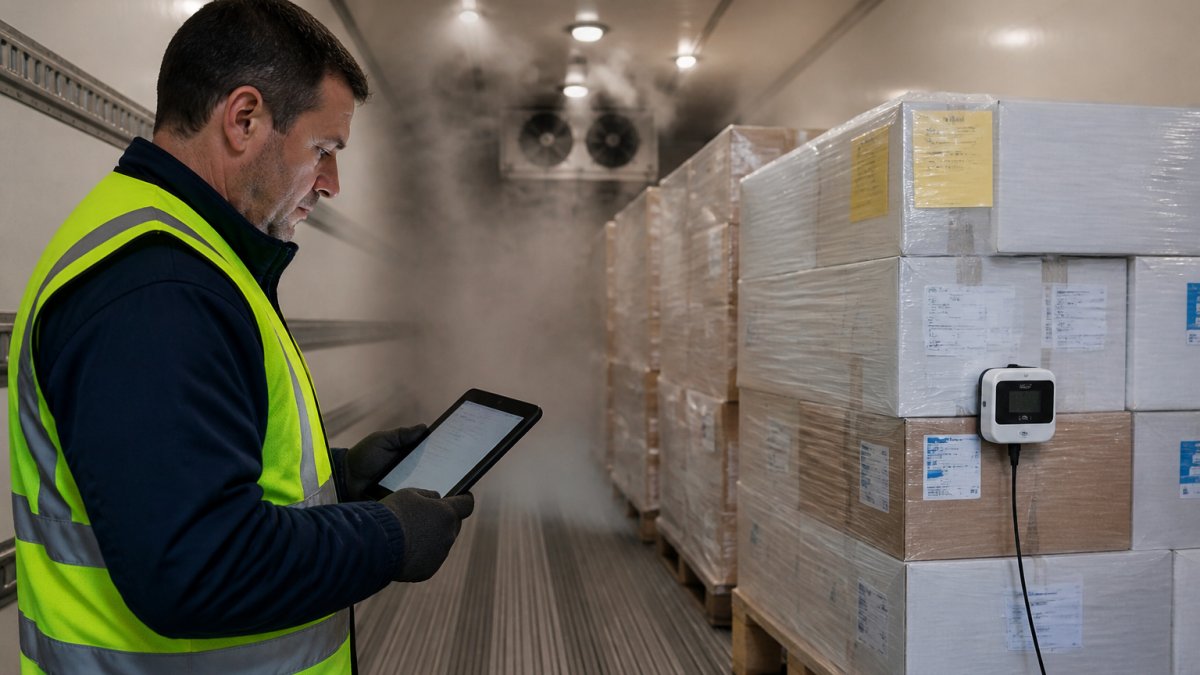
At A&B Logistics Inc., every pickup, handoff, and delivery runs against a written SOP, and trailers ship with tamper-evident seals and temperature logs that go to the shipper. That's how freight claims get reduced: the data exists before anyone needs it.
The CDC vaccine storage and handling toolkit is a useful reference for the monitoring standards that pharmaceutical shippers are typically held to.
Step 4: Plan for Refrigerated Freight Transit Time
Refrigerated freight transit time is not the same as dry van transit time, and planning them identically is how tight delivery windows get missed. Cold chain lanes carry extra steps: pre-cooling, seal verification, and monitored handoffs.
Build your schedule around these factors:
- Pre-cooling time before the trailer loads
- Realistic drive hours under hours-of-service rules
- Buffer for weather and urban congestion
- Receiving window constraints at the destination
For rural deliveries with narrow windows, confirm the carrier's actual on-time performance on comparable lanes rather than accepting a general promise. Ask what happens operationally when a window is at risk, and who calls you.
A carrier with a named point of contact and 24/7 dispatch can reroute or re-sequence before a miss becomes a claim. That's the operational difference that matters on a three-day lane into a rural facility.
Step 5: Confirm the Booking and Prepare for Pickup
Confirmation is where a good plan either locks in or quietly falls apart. Get the details in writing before the trailer arrives.
| Confirmation Item | What to Verify | Why It Matters |
|---|---|---|
| Temperature band | Exact range and duration | Prevents equipment mismatch |
| Equipment | Pre-cooled trailer, logger placement | Protects the load from pickup |
| Pickup window | Date, time, dock constraints | Avoids detention and delays |
| Documentation | Packet received and acknowledged | Keeps freight compliant |
| Contact | Named rep and after-hours number | Gets exceptions handled fast |
| Seals | Tamper-evident seal numbers | Supports any claim resolution |
Walk your dock team through the pickup. Confirm the trailer is at temperature before loading begins, record seal numbers, and verify the logger is active. Send the consignee a heads-up with the expected arrival window.
Common Mistakes to Avoid When Booking Temperature-Controlled Shipping
Most cold chain failures trace back to a handful of recurring booking errors. Here's what we see most often.
Specifying temperature without duration. A range means nothing without a time attached to it. State both.
Booking on price alone. A cheaper rate on a lane that generates an excursion costs far more than the difference in freight. Factor in claim exposure, not just the line item.
Skipping the pre-cool check. If the trailer isn't at temperature before loading, the freight starts the journey already out of spec.
Leaving documentation for pickup day. Incomplete paperwork delays loading and can void compliance coverage.
Accepting a phone tree instead of a contact. When something goes wrong at 2 a.m., you need a person, not a menu.
Assuming the consignee is ready. Confirm receiving hours and dock access before dispatch, especially for rural deliveries.
Conclusion
Booking nationwide temperature controlled shipping comes down to discipline: define the requirement, assemble the documentation, vet the monitoring, plan the transit, and confirm in writing. Each step protects the next, and the carriers that do this well make it look routine.
A&B Logistics Inc. has moved temperature-controlled and high-value freight for over 17 years as a family-owned operation, with SOP-driven handling on every load, verified cold chain equipment, real-time GPS monitoring, and a named contact who answers. If your freight can't afford an excursion, that's the standard to hold your carrier to.
Request a quote from A&B Logistics Inc. and see what a fully documented cold chain booking looks like.
Frequently Asked Questions
How do I book temperature-controlled freight?
Start by defining your temperature range, shipment size, and delivery timeline. Then contact a carrier that specializes in temperature-controlled shipping, provide your requirements, and confirm equipment availability. You'll need to share pickup and delivery addresses, commodity details, and any special handling instructions. Most carriers require a signed service agreement and may ask for documentation like a bill of lading and temperature logs. Booking early helps secure the right trailer type and avoids delays.
What information do I need to book a temperature-controlled shipment?
You'll need the exact temperature range (e.g., 2°C to 8°C for many pharmaceuticals), shipment weight and dimensions, pickup and delivery locations, and desired transit time. Also prepare any required pharmaceutical shipping documentation, such as certificates of analysis or temperature-sensitive handling instructions. For regulated goods, include chain-of-custody forms and emergency contact details. Accurate information ensures the carrier assigns the correct equipment and maintains compliance throughout transit.
How can I verify that a shipment stayed within its required temperature range?
Use calibrated data loggers placed inside the trailer to record temperature at set intervals. After delivery, download and review the data to confirm the shipment remained within the specified range. Many carriers provide real-time cold chain monitoring and tracking, allowing you to check conditions during transit. Look for tamper-evident seals and request a temperature excursion report if any deviation occurs. This documentation is critical for compliance and claims resolution.
What should I ask a carrier about its drivers and cold-chain procedures?
Ask about driver training on temperature-sensitive handling, background checks, and certifications. Request details on pre-cooling protocols, data logger calibration schedules, and standard operating procedures for pickup and delivery. Confirm how the carrier monitors temperature in real time and what happens if an excursion occurs. A reliable carrier will provide documentation and clear answers, ensuring your cold chain integrity from start to finish.